
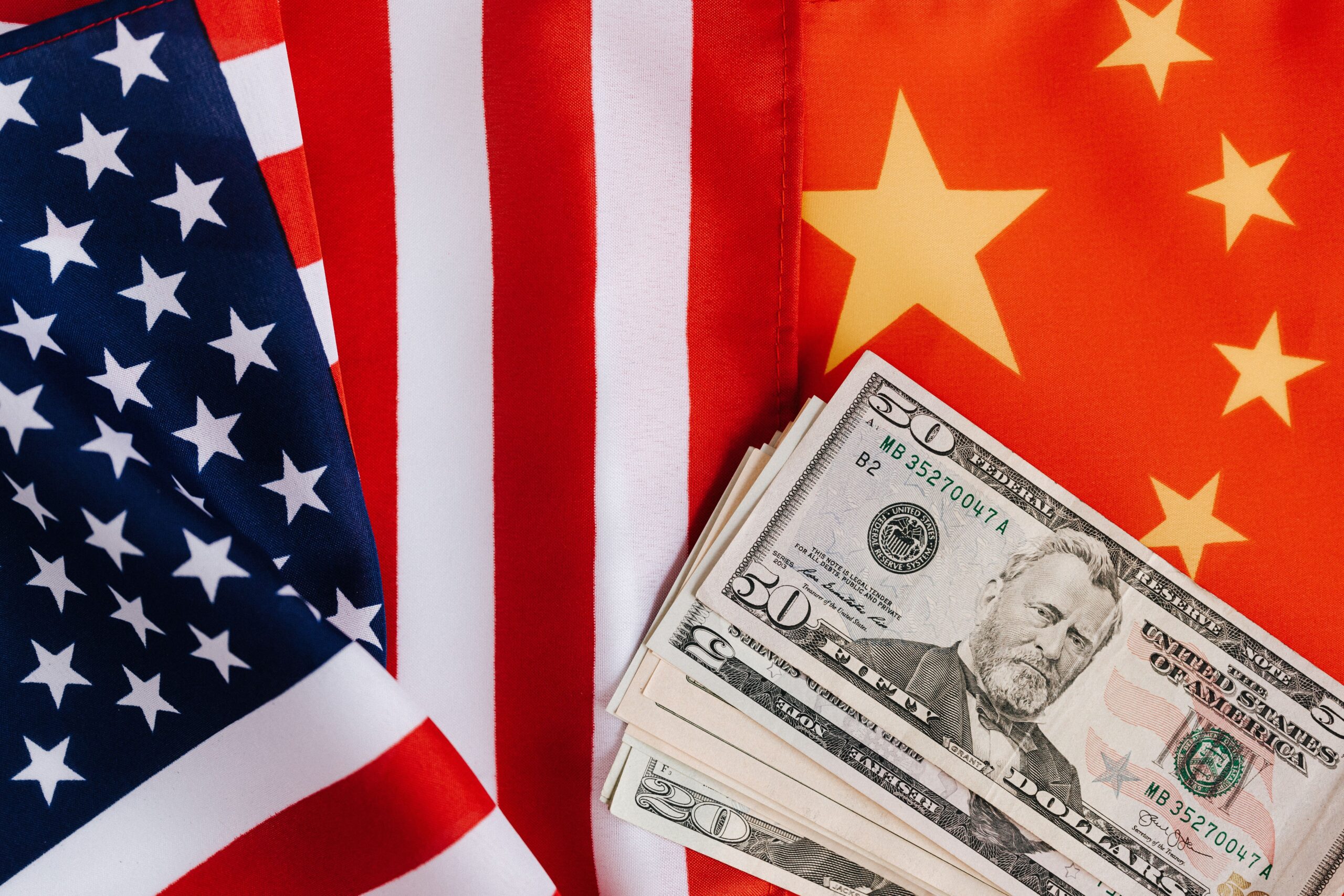
In the fifth century BC, the Athenian historian Thucydides recorded the collapse of the Greek balance between Athens and Sparta. In his analysis of the Peloponnesian War, he attributed the conflict to a specific dynamic: the growth of Athenian power and the fear this growth instilled in Sparta made war, in his words, inevitable. More than two millennia later, political scientist Graham Allison revived this reading to describe a recurring pattern in international history: the quasi-structural confrontation between an established power and a rising power. He named it the Thucydides Trap.
Allison's thesis is not deterministic. Of the sixteen times this pattern has repeated over the past five centuries, twelve ended in war. Four did not. The difference, in each case, lay less in the structure of the international system and more in the concrete decisions made by specific leaders at specific moments. It is this margin—narrow, but real—that is worth observing when looking at the sequence of events that the US and China have been producing, year after year, since the rivalry between the two powers ceased to be a theoretical hypothesis and became an everyday reality.
The argument here is simple. Almost every major strategic move in the recent international system, whether made by Washington or Beijing, but especially by Washington, ends up converging toward this same structural trap. Not by accident. By accumulation.
Venezuela, Oil, and the Chinese Hub
In January 2026, a US military operation in Caracas culminated in the capture of Nicolás Maduro. Trump announced that the United States (external link) would administer the country during a transition period and that American oil companies would take over the exploitation of the planet's largest oil reserves. Delcy Rodríguez, Maduro's vice president, assumed the interim presidency.
The least discussed aspect of the operation is its Sino-Russian dimension. Until then, Venezuela had been one of the primary footholds of the Chinese presence in South America, with billions of dollars in oil-backed loans, infrastructure projects, and a diplomatic relationship cultivated for more than two decades. Hours before his capture, Maduro met with China's special representative for Latin American affairs—a meeting that, in retrospect, epitomizes the underlying dispute. Analysts point out that the American objective is not limited to controlling oil. It includes deliberately pulling Venezuela out of the Chinese, Russian, and Cuban orbit. Beijing condemned the operation as illegal.
Iran, Energy Chaos as Common Ground
Since February 28, 2026, the United States and Israel have been conducting coordinated strikes against Iran. Tehran responded by blocking the Strait of Hormuz, one of the world's most strategic energy routes, forcing emergency negotiations with Oman to establish an alternative maritime transit mechanism.
The Iranian regime's primary external partners during this period of isolation are, once again, China and Russia—regular buyers of Iranian oil and voices of diplomatic support in multilateral forums. The pattern repeats itself. Where there is direct American pressure on a sanctioned or targeted state, there is also, almost invariably, a Chinese or Russian economic link behind it.
Ukraine, the Western Frontier of the Same Dispute
The Russian invasion of Ukraine in 2022, justified by the Kremlin on regional security grounds in the face of the prospect of Ukrainian NATO accession, resulted in a regime of Western sanctions against Moscow unprecedented in recent history—commercial, financial, and technological. Russia, China's foremost strategic partner in Eurasia, found itself compelled to deepen its economic dependence on Beijing precisely at the moment the West was attempting to isolate it. The side effect of the war in Ukraine was also Asian. It accelerated the Sino-Russian rapprochement even further.
The “Economic D-Day”
In August 2026, US Treasury Secretary Scott Bessent announced a new round of sanctions against Iran and against any country, bank, company, or institution assisting Tehran in circumventing existing restrictions. Trump dubbed the measure an “economic D-Day” and vowed to severely punish the Iranian regime's commercial allies.
The announcement brings the circle full close. Iran's largest trading partners amid the blockade are, once again, China and Russia. A measure officially designed to pressure Tehran has as a practical side effect, and perhaps as an unstated objective, raising the operational costs for the two powers that Washington already treats as strategic rivals across virtually every other front: trade, technology, military, and now, once again, energy.
Accumulation as a Path, Not as a Destination
In isolation, each of these episodes possesses its own logic: an intervention driven by oil interests, a war motivated by nuclear proliferation, an invasion justified by regional security, a sanctions package targeting a pariah state. Viewed together, they form a pattern in which virtually every path available to American strategic action runs into Chinese or Russian interests, one way or another, deepening the antagonism between Washington and Beijing.
This is the same dynamic observed on the eve of both world wars. No power in 1914 or 1939 made decisions believing it was precipitating a continent-wide conflict. Each move—an alliance, an ultimatum, a mobilization, an exclusion zone—seemed, at the time it was made, a rational and limited response to an immediate problem. The resulting war was not the goal of any of the primary decision-makers. It was the accumulated byproduct of decisions made without anyone, individually, choosing war.
The Thucydides Trap is not a sentence. It is a structural tendency that becomes reality through concrete decisions made by concrete individuals in response to problems that are rarely framed in terms of great-power rivalry. Venezuela, Iran, Ukraine, and now the economic D-Day are not, individually, a step toward war between the US and China. But taken together, they form precisely the kind of path that history has shown to be difficult to reverse once traveled past a certain point.