
1. INTRODUCTION
Since the beginning of human life, culture has also emerged as something that connects individuals and creates a sense of belonging within a given group, people, or set of actions, leading to the performance of specific activities that distinguish it from other cultural groups; it has thus become something exclusive to human beings as rational agents that evolves unconsciously over time.
In a general context, for various authors, culture can be defined as a set of habits, values, principles, ideas, and actions followed by a group of people during a given period; however, in contemporary times, the meaning of culture extends far beyond this. In addition to the aforementioned concept, it can be understood as a lifestyle pursued by two or more people, languages spoken by a social group, artistic manifestations encompassing all realms of the arts (theater, music, visual arts, dance, cinema, among others), fields of communication such as podcasts, radio, television, social media, etc., and diverse sports. These cultural manifestations are considered natural since the vast majority of them are neither planned nor structured before they are adopted; they are ephemeral and enduring at the same time, for they can and will disappear, yet they may also preserve their traditions over long periods.
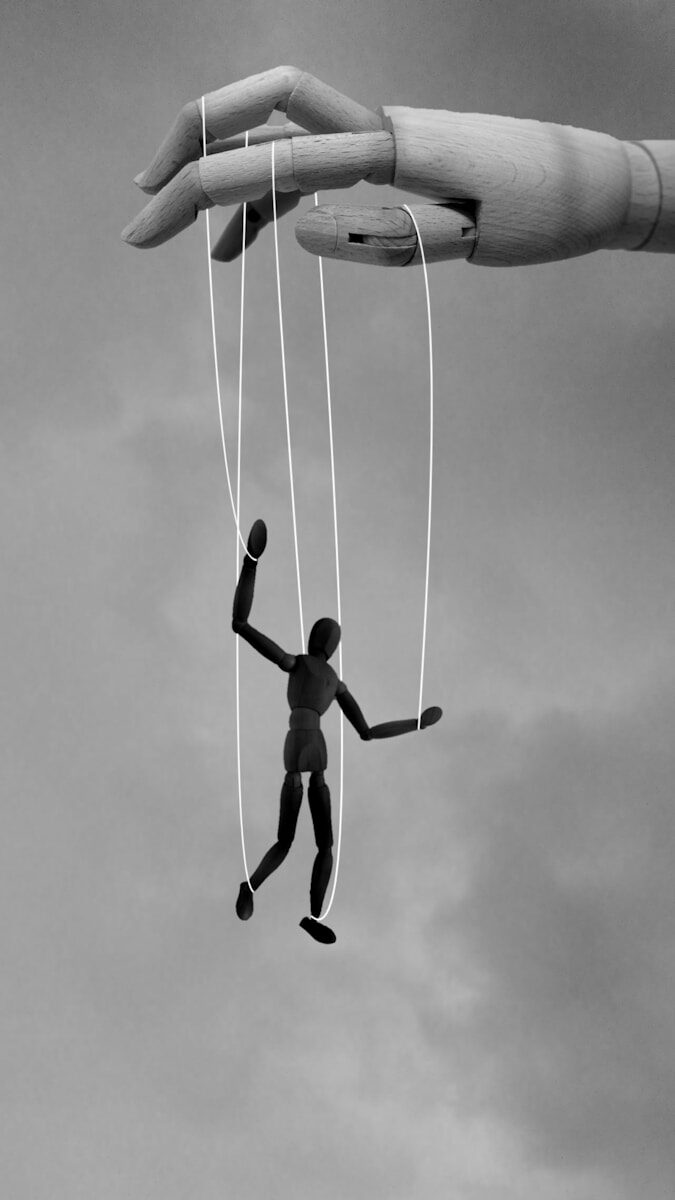
However, since the emergence and consolidation of Capitalism (external link), it is possible to observe that the cultural formation of certain societies has not been entirely natural, particularly in contemporary societies with the aid of late capitalism (JAMESON, 1991). What has become increasingly clear is a division involving small groups—generally individuals and institutions possessing strong economic, political, and social power—that hold the capacity to influence the cultures of broad societies—which lack economic or political power—through artistic and communicative means, and even through ideas and habits, in order to advance their own interests and desires that will, in some way, benefit them. In this text, these actors are designated by Junior Dias as the Cultural Bourgeoisie.
Based on this initial concept, this study seeks to address the question: "In what manner does the cultural bourgeoisie influence society, and how significant is this influence?" Furthermore, it aims to understand the relations among social classes within the social fabric, production, consumption, politics, and the economy, demonstrating the necessity of a bond between them that aids in reinforcing capitalism and inequalities, while noting a manipulation and loss of cultural autonomy within societies.
2. METHODOLOGY
To construct this study, a qualitative approach was employed in its methodology to analyze and comprehend current relations of power and manipulation through culture, interpreting theories and concepts. The objective is exploratory in nature, as it seeks to broaden discussions surrounding the term understood in this research as the "cultural bourgeoisie." Finally, a bibliographic procedure was applied, utilizing secondary sources such as classic and contemporary books and articles from fields such as Sociology and the Social Sciences, analyzing and correlating studies, ideas, and concepts with contemporary relations of power and domination, in which bourgeois groups in society employ cultural instruments as the primary tool for social control and the exercise of domination over groups lacking financial, cultural, political, and social power.
Authors such as Karl Marx, Max Weber, Theodor Adorno, Max Horkheimer, and Antonio Gramsci were selected as primary theoretical sources, chosen for their contributions regarding hegemony, domination, and cultural influence, without excluding the use of other works and ideas by additional authors cited throughout the body of the research and listed in the references section, who have provided important contributions to this text and to society.
Despite the vast diversity of works serving as the research foundation, there are limitations to this study due to the absence of empirical research and case studies, remaining strictly within the theoretical sphere.
Furthermore, it proceeds from the hypothesis that small groups with greater political, economic, social, and cultural power exercise hegemony and domination through culture and cultural and artistic manifestations over social groups that possess lesser access and financial, political, and cultural power. Accordingly, this analysis focuses exclusively on contemporary capitalist societies.
3. CULTURAL MANIFESTATIONS AS THE “NEW OPIUM OF THE PEOPLE”
Cultural manifestations present across diverse societies over time perform extremely important functions, both for the sense of belonging within that society and for the expression of feelings, which humans use to unwind, tell stories, pass the time, and express what they feel without necessarily relying on words.
On the other hand, with the consolidation of industrial capitalism, people began working 12 to 16 hours a day in repetitive and exhausting tasks. Similarly, even centuries after the first Industrial Revolution and the establishment of labor laws and trade unions, workers still spend a large portion of their day at work—according to the National Union of Labor Tax Auditors (Sindicato Nacional dos Auditores Fiscais do Trabalho - SINAIT)—and, although technological advancement has reduced roles involving repetitive functions, they still exist, which does not negate the fact that people remain engaged in activities related to their jobs (commuting, phone calls, etc.) even after the end of their daily or weekly working hours, reinforcing their physical and mental exhaustion.
Thus, the working class seeks cultural activities, such as cinema, music, leisure attractions and activities, and sports, with the goal of resting and unwinding to shift focus away from their jobs and make life more bearable, serving as a kind of escape and anesthetic to alleviate the effects of the exploitation of their labor—a striking example in Brazilian society being soccer, barbecue, and the consumption of alcoholic beverages on weekends, considered days of rest (DUNNING, 2013)—which, for Marx, applied only to religion in his writing "religion is the opium of the people" (MARX, 1843). Culture is thereby rendered a sort of opium of the people, encompassing broader areas beyond religion and not being entirely negative (unlike the original perception of Marx's "Opium of the People," which is typically understood as completely negative, labeling him an "enemy of religions"), but rather something that aids in structuring and strengthening cultures, fostering interpersonal bonds.
Such a process occurs because, through the dissemination of shared sentiments within a society, culture is consolidated, as explained by Émile Durkheim through the Collective Consciousness, defined by beliefs or sentiments shared within a society (DURKHEIM, 1893, p. 50). It also enhances collective identity, causing individuals to shift from understanding themselves merely as singular beings to viewing themselves as a collective (DURKHEIM, 1893), while also legitimizing relations of power and domination, as workers unconsciously begin to identify as a class dominated by their bosses and jobs. Notably, this self-identification is not a matter of forming class consciousness, but rather an unconscious identification with a dynamic involving the exercise of power by the bourgeoisie and the lack of power of the working class, a common trait in the Brazilian social fabric, particularly epitomized by the popular saying "Those who can, command; those who have sense, obey," highlighting, beyond power, the traditional domination imposed by the owners of the means of production for centuries, alongside the legal domination ensured by legislation itself.
4. THE RATIONALIZATION OF CULTURE
Over time, the bourgeoisie came to understand that cultural manifestations are an essential component of society and are fundamental for keeping workers subordinated to bourgeois exploitation without some form of revolt or revolution (ADORNO; HORKHEIMER, 1947) akin to the revolution initiated by the bourgeoisie in 1789 (the French Revolution), given that cultural expressions have become the "new opium of the people" and a facilitator for ensuring exploitation, since popular expressions would suffice to provide the population with joy and rest, thereby securing production at levels equal to or better than prior to that brief period of rest (GRAMSCI, 1948). This means that the bourgeoisie became aware that culture is the medicine of the people; by withholding access to this knowledge from the working class, it succeeds in using it as an instrument to expand bourgeois influence and control over workers.
With this begins the use of culture as a means to intensify exploitation and keep the bourgeoisie in control, in addition to expanding profit margins, which increases inequalities and bourgeois power and domination—that is, the beginning of the rationalization of culture. The bourgeois class develops cultural rationalization in such a way that it capitalizes on culture and seeks ways to use this human characteristic as yet another way to profit, advancing it through ideological instruments. In light of this, the cultural bourgeoisie emerges, operating in various areas aimed primarily at influencing:
Behavior: actions that are generally imposed by digital influencers, cinema, and television; charismatic domination is used to manipulate and dictate how a given society should act, establishing behaviors and social norms that must be followed and, if they are not, there are consequences—distinct from formal sanctions and penalties—such as the social exclusion of certain groups that oppose or fail to follow such behaviors imposed by society itself. An example that has been consolidating in recent times is meritocracy, or meritocratic thinking—an idea and mindset that fosters increased production by asserting that the harder someone works and strives, the more they will be financially rewarded, without taking into account class antagonisms and the distinct economic and social opportunities of different social classes. Meritocracy is defined by the contemporary Brazilian thinker Mário Sérgio Cortella as: “... Meritocracy is a theme that only has valid presence when everyone starts from the same point of equality...” quoted on a Rádio Jovem Pan program.
Thought: in this type of influence, the cultural bourgeoisie primarily uses instruments such as social media, radio, television, visual arts, and even theater and music to interfere in the choices and thoughts of the population, especially regarding political and social ideologies—that is, ideological domination hidden from the population to impose ideas and increase population control, ranging from establishing ideas on matters related to the bourgeoisie to subjective impositions regarding the choice or exclusion of a political leader in extreme cases (ALVES, 1962). A stark example is the use of posters, television and radio advertisements, and other instruments during the Cold War, promoting both the capitalist side with the “American Way of Life” and the socialist side, championing equality and technological advances.
Consumption: here, the cultural bourgeoisie influences society to increase or decrease the consumption of certain products or economic sectors—such as goods, food, series and films in the film industry, television shows, music, artworks, or just one of these that aids in the overproduction of all the others, while referring back to a single initial product; this is directly related to the culture industry (ADORNO; HORKHEIMER, 1947), forcing cultural trends and generating high demand and low supply, which results in elevated prices and fosters individuals' false need for products that, for the most part, will not be used much and will occasionally be forgotten, which in turn will make way for other products planned by the cultural bourgeoisie. It is worth noting that not all products are introduced by the cultural bourgeoisie; there are those to which society itself forms an attachment and sparks high demand driven by the need to possess such a product, and the cultural bourgeoisie merely sustains the economic cycle. Examples of consumption influenced by the cultural bourgeoisie include the mass production of products related to artworks (Leonardo da Vinci’s Mona Lisa painting being the most famous case of mass reproduction), movie-based toys, and even television films and series or streamingplatforms that feature prolonged sequels and diverse types of products referencing the original works.
Thus, one can increasingly observe the cultural hegemony (GRAMSCI, 1948) created, enforced, maintained, and exercised by the cultural bourgeoisie to preserve its status as a ruling, non-dominated class, further legitimized by the state through legal domination (WEBER, 1922) and also indirectly validated by the working class itself through charismatic domination (WEBER, 1922), which often forms bonds with the objects of bourgeois domination, such as inspiration from films, digital influencers, politicians, and others, thereby reinforcing the need to maintain consistency among these instruments. Moreover, lacking class consciousness—a condition also planned and executed by the bourgeoisie—it cannot express itself, exercise its power (MARX; ENGELS, 1848), or be aware that it is being manipulated to fulfill the desires of the exploiting class; and the bourgeoisie's position as the ruling class is further legitimized by capitalism, structured and consolidated in all spheres of modern society through traditional domination (WEBER, 1922).
With the strengthening of the cultural bourgeoisie as a culturally hegemonic group, in addition to further exploiting the working class and fulfilling its political, economic, and social interests and desires, class antagonisms increasingly intensify, helping the bourgeoisie accumulate more wealth while economically weakening the working class, such that other individuals or cultural groups that express themselves in diverse ways—including against cultural hegemony through cultural means—are silenced, oppressed, and dominated so that they act in accordance with the cultural bourgeoisie's impositions, influencing other individuals within society to also follow bourgeois impositions and sustain these exploitative ties.
However, there is still a limit to the cultural bourgeoisie's manipulation and domination of society, as the bourgeoisie understands that just as it revolted during the French Revolution (MARX, 1848), the working class can do so as well; with the aid of cultural manifestations and instruments, society can dismantle the hegemony and domination imposed by the cultural bourgeoisie, bringing about a rupture in the social structure, since culture is one of the most powerful instruments of struggle due to its subtlety and acceptance by common sense (GRAMSCI, 1948). Furthermore, the cultural bourgeoisie recognizes that without society its power is ineffective, because the social fabric is the foundation of cultural expressions, which the bourgeoisie appropriates to exploit the economic and productive forces of the entire social body; therefore, it exercises a certain caution so that society does not become aware that its culture is not entirely natural, but is rather being influenced by ideological means and employed to facilitate its own exploitation and widen social inequalities, thereby placing a limit on the hegemony of the cultural bourgeoisie and restricting the instruments of its domination. This restriction, in turn, does not represent a diminution of domination, but merely an invisible threshold that can be crossed to further increase the bourgeoisie’s profit margin.
5. RESPONSE TO CULTURAL INFLUENCE
Although the cultural bourgeoisie's influence on society is intense, there are small groups that seek to fight against this cultural domination and hegemony, bringing knowledge to the entire social spectrum and, above all, protesting against it artistically, while other groups favor this influence. In this way, it is evident that society is not homogeneous, given the existence of diverse cultures within a single society—something that complicates the dissemination of cultural hegemony, since different ideas, thoughts, and cultures will be in conflict with one another and with the cultural bourgeoisie, hindering a homogeneity that, in turn, is argued to be impossible by Pierre Bourdieu in “O Poder Simbólico”.
However, for Marx, society internalizes cultural influence because, in addition to the bourgeois class dominating the economy and the means of production, it also dominates the ideas of the working class, resulting in the defense of bourgeois interests by the social fabric and the normalization of exploitation and domination (ENGELS; MARX, 1932), even while defending a possible class consciousness that could alter this perspective. For Weber, on the other hand, society can act in various ways regarding the cultural influence legitimated by the State, enabling bourgeois domination, and can accept, reject, or even adapt it according to its ideals or values, since society is not a homogeneous body, but rather composed of diverse groups and individuals (WEBER, 1922). For Gramsci, society accepts domination because the influence is so intense and recurrent through media and institutions that individuals normalize it and merely act as if influence and domination did not exist; and, like Marx, he proposes a solution that would be counter-hegemony—ideas and actions aimed at diverting from cultural hegemony, weakening it until it diminishes or is ended (GRAMSCI, 1948)—whereas, for Adorno and Horkheimer, society adheres to and contributes to the influence and domination of the cultural bourgeoisie through its consumption, since, through the culture industry, consumption is highly encouraged and critical thinking is devalued and reduced, strengthening capitalism (ADORNO; HORKHEIMER, 1947).
6. CONCLUSION
This paper sought to analyze how the influence of the cultural bourgeoisie occurs in contemporary society, drawing upon ideas and concepts from authors such as Marx, Weber, Gramsci, and others, in order to develop research and understand social relations and the exercise of domination and power using culture as a primary instrument. It was observed that power relations within society are entirely linked to economic and political power structured since the onset of the bourgeoisie's dominant class position, reinforcing the concepts of legitimate, traditional, and charismatic domination that are used by the cultural bourgeoisie to control thoughts, behaviors, ideas, and consumption across the entire social fabric through the arts and communications—which serve as instruments of domination used by the cultural bourgeoisie to impose its interests and desires, expand its economic, political, and social power, and maintain its status as a dominant and exploitative class that appropriates workers' production and consumption.
By recognizing culture as an essential part of human beings, the cultural bourgeoisie began to rationalize culture—that is, it came to understand it as both a human need and an opportunity for greater profit—thus initiating cultural capitalization, which leads to the overproduction of the arts and cultural expressions, understood as the culture industry. Furthermore, through the rationalization of culture, the bourgeoisie came to exercise a hegemonic role, using society as a workforce for the mass production of its own culture and consumer market, thereby creating a solid and important bond with workers that shifted from something that would merely increase its profits to something necessary; however, the culture industry is still understood as a mere destructive instrument of artistic expressions aimed at strengthening capitalism.
In light of this, society in general does not yet possess the knowledge and power to put an end to this cultural domination, as it is the victim of exploitation and ideological influence that prevents critical analysis and structural change, given that even its culture—which, in principle, is unconscious and natural—is manipulated according to the desires of the ruling class. Thus, the initial question is answered, noting that the cultural bourgeoisie influences behavior, thought, and social consumption, becoming so crucial that it turns into a necessary bond for the survival of the cultural bourgeoisie and, consequently, for the intensification of capitalism and the widening of social inequalities.