
The speeches of political leaders can serve as instruments of power because they help define how specific countries, governments, and events are perceived by the international community.
It was precisely this dimension that caught my attention while following President Donald Trump’s speech at the 81st United Nations General Assembly, held on September 22, 2026. In addressing Cuba, President Trump made several statements, among them: that Cuba is a “failed state” and that the communist regime was under unprecedented pressure and would fall. During these remarks, one naturally observed the immediate walkout of the Cuban delegation from the grand diplomatic hall.
In this vein, more than merely analyzing the words used by Trump, it is vital to try to understand the political significance of doing so precisely at the United Nations General Assembly.
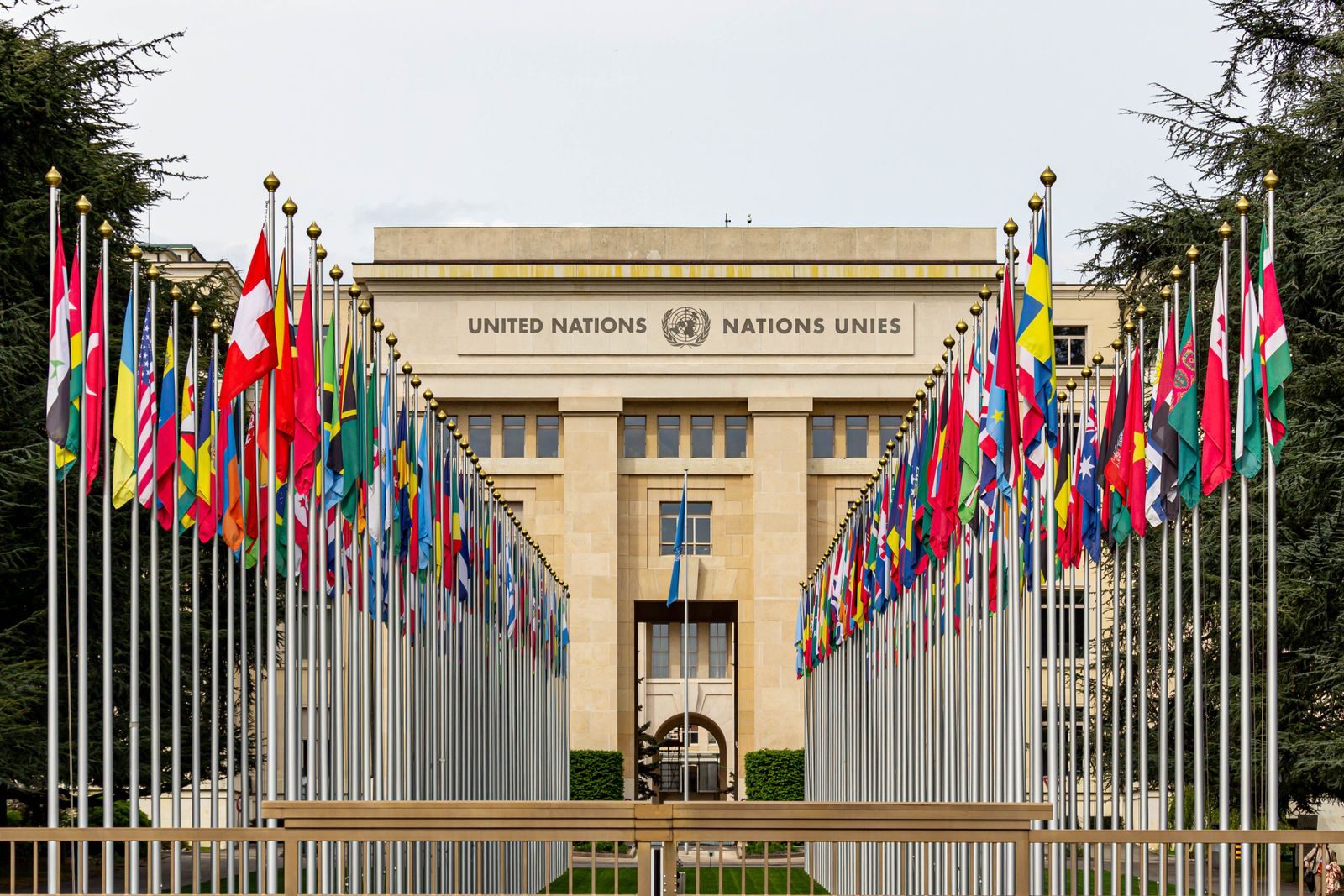
The UN (external link) is not simply just another diplomatic venue. In a very real sense, that diplomatic hall is one of the greatest political stages in the international system. Thus, when a president uses that rostrum to characterize another state in negative terms, the message is no longer directed solely to the government of that country. It comes to be heard both by the remaining states and by the international press, and above all, by global public opinion.
This is where an important dimension of International Relations comes into play: the power of narratives.
For a long time, when thinking about international power, we traditionally fell back on military and economic issues. Contemporary international politics, however, demonstrates that power also lies in the capacity to produce discourses and, through words, shape specific perceptions whose ultimate end is to influence how events are interpreted.
A state may try to convince others that a given country represents a threat, or that a given government has failed, or even that a given reality needs to be transformed. From that moment on, a contest begins not only over reality itself, but also over the interpretation of the very reality being constructed.
In the specific case of Cuba, Trump’s declaration must be understood within a relationship historically marked by confrontation between the two governments. It is hardly news that the United States has maintained an economic, commercial, and financial embargo against Cuba for more than six decades. In 2025, the United Nations General Assembly once again approved a resolution calling for an end to this embargo, with 165 votes in favor, 7 against, and 12 abstentions; even so, little is seen in terms of results from this resolution, because its actual implementation effectively depends on the will of states.
Reflecting on these indicators does not mean ignoring Cuba's domestic problems. There are indeed economic, social, and political issues that can and must be discussed. Yet it also does not seem sufficient to analyze the Cuban situation without considering the impact of decades of economic sanctions and restrictions imposed by the United States. That would be an analytical utopia.
It is precisely in this sphere that international politics becomes complex. Each state presents its own narrative, selects specific indicators and events, and seeks to convince others of the legitimacy of its position.
Trump seems to understand this dimension of international politics very well. That is why, in speaking about Cuba before virtually the entire international community, the issue ceases to be solely about Cuba. In this regard, it is clear that the message is also addressed to countries that maintain diplomatic, economic, or political ties with Cuba. It is, in truth, a way of signaling the current U.S. position while simultaneously creating an international climate favorable to its interpretation of Cuba's political future.
As such, it is natural to observe that international speeches can serve to signal intentions, establish political stances, and gauge the reactions of other actors. Diplomacy also operates through such signals.
The logic in this case would be: present a position, observe the responses and reactions of other actors, and subsequently adjust policy. This is an age-old dynamic of international relations in which states seek to determine how far they can advance, what the diplomatic costs of their decisions will be, and which countries might support or contest a given initiative.
For this reason, the episode concerning Cuba deserves attention not only for the content of Trump’s words, but for the forum in which they were spoken.
The UN General Assembly ought to be, above all, a space for dialogue among sovereign states. When this space is transformed into an arena of rhetorical confrontation, there is a risk that diplomacy will be progressively replaced by the logic of imposition.
States defend national interests, pursue security, protect alliances, and seek to enhance their influence. The difference is that, following the two world wars and the creation of the United Nations, an expectation was also established that the exercise of power should be constrained by the framework of international law, the sovereignty of states, and the peaceful settlement of disputes set forth in Chapter VI of the United Nations Charter.
This is why the Cuban case should not be viewed solely from the perspective of the United States or Cuba. For many countries, particularly across the Global South, Cuba also holds a historical memory linked to African liberation struggles. The relationship between Cuba and Angola is a prominent example. On December 22, 1988, Angola, Cuba, and South Africa signed the New York Tripartite Agreement, tied to the process that led to the withdrawal of foreign forces from Angola and the implementation of Security Council Resolution 435 in the context of Namibian independence.
Furthermore, the UN General Assembly itself had condemned apartheid as a crime against humanity and a threat to international peace and security. For this reason, for many Africans, speaking about Cuba does not merely mean discussing a different political system or a dispute between Cuba and the United States. There is also a historical memory of relations between Cuba and the liberation movements of Southern Africa.
This helps explain why certain narratives about Cuba may be received differently in the United States, in Cuba, in Angola, or in other specific settings across the Global South.
Ultimately, this episode naturally demonstrates that international politics is also a struggle over the construction of reality. That is to say, whoever controls the narrative does not necessarily control reality, but can influence how that reality is perceived.
One discourse can portray Cuba as a failed state. Another can portray Cuba as the victim of decades of external pressure. Both seek to organize reality around specific facts, interests, and interpretations. It is up to the international community to look beyond these narratives, test discourses against data, and seek to understand the full complexity of the issue.
Perhaps this is one of the United Nations’ greatest responsibilities: not to allow the power of one state to be mistaken for the absolute truth about another state.
The might of a power can generate pressure. It can generate sanctions. It can generate influence. It can even generate narratives with immense international reach.
Yet in an international order founded on dialogue, might should not replace right, and narrative should not replace facts.
The case of Cuba shows us, once again, that words are also instruments of power. And when spoken before the entire world, they can represent far more than mere words.