
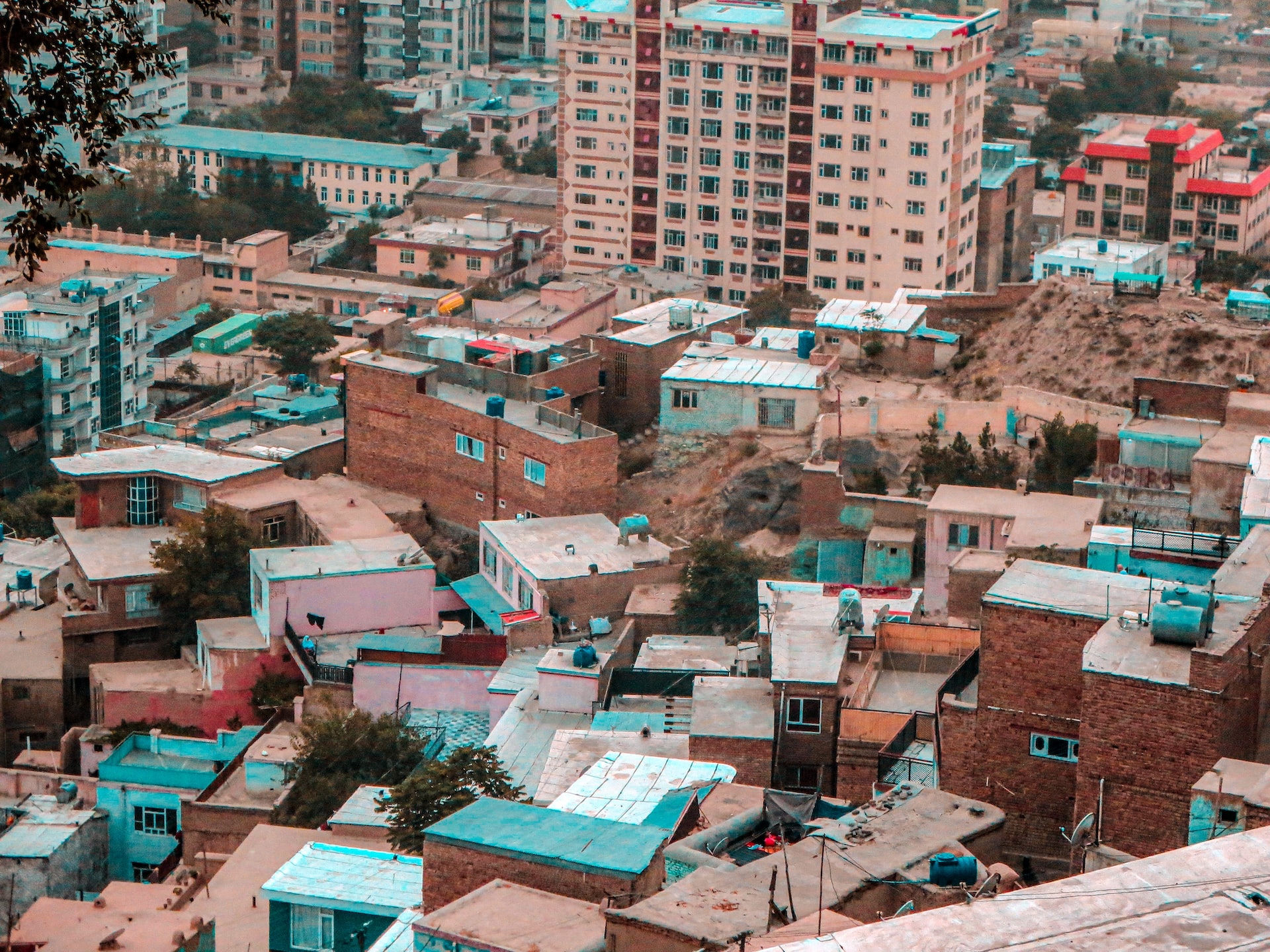
The year 2021 was marked by momentous events for the Afghan people, including the withdrawal of United States troops (which began in May 2021 and concluded onSeptember 11, 2021 (external link)), the concurrent return to power of theTaliban (external link), and a worsening humanitarian crisis. Against this contemporary backdrop, revisiting Åsne Seierstad’s The Bookseller of Kabul offers a valuable opportunity to examine the effects of Taliban policies on the everyday life of an Afghan family. The bestseller also recounts several important events in the formation of Afghanistan, the crises experienced before the Taliban’s rise and after its fall, and the persistence of everyday life despite the lasting damage inflicted by conflict.
The Khan Family
The bookseller Sultan Khan, a respected member of his community and patriarch of the Khan family, is the book’s titular figure, around whom its other characters revolve. At the beginning of the narrative, Sultan emerges as a charismatic man with a passion for books and Afghan literary culture. He might be described as a visionary who, in a society with limited literacy, harbors ambitious dreams for the period following the end of Taliban rule. Readers follow Sultan Khan’s development and the growth of his fascination with literature; his desire to expand his business and his involvement in the intricate world of book piracy; his sorrow over the loss of rare works; and his wish to help rebuild the collections of Kabul’s library, devastated by foreign interventions and the Taliban’s seizure of power.
The interactions among the other characters reveal how their actions depend on Sultan Khan’s decisions. Gradually, he displays behaviors that may be difficult to understand from a Western perspective. One example is his relationship with his two wives. Sharifa, his first wife, struggles with feelings of rejection following the arrival of his second wife and lives in the house in Pakistan that served as the family’s refuge during Taliban rule. Sonya, his teenage wife, was given in marriage at sixteen. The narrative suggests that Sultan is just over fifty, and although Sonya’s parents question the age difference, economic considerations take precedence in marriage arrangements for the bride’s family. For the groom, by contrast, youth and appearance are paramount.
Although the book was published almost twenty years ago, this practice continues today. According to data from theUnited Nations Children’s Fund (external link) (UNICEF, originally the United Nations International Children’s Emergency Fund), the political instability that began in 2020, together with impoverishment caused by environmental factors and COVID-19, may have contributed to an increase in marriages arranged in exchange for payments. The organization estimates that the children affected range in age from six months to seventeen years. Alongside violence, exclusion from education, and child labor, child marriage carries risks including pregnancy and maternal and fetal death. These issues recur throughout the book through different characters, all of whom share one or more of these experiences.
This opening section also introduces the Khan family’s home, consisting of four rooms shared by all members of the household: Sultan’s mother, sister, and one brother; his wife and newborn daughter; and three sons. Already too small for its many occupants, the house also bears the scars of civil war, with cracks, holes left by bullets and grenades, and glassless windows covered with plastic.
One noteworthy aspect of the relationship between history and the built environment is the location of the Khan family’s home in the Mikrorayon neighborhood. The area is described as one of those most severely affected by the civil war, situated between the two opposing sides. War was not the only force to transform the landscape: the Khans’ home is among the residences built by the Soviet Union in the 1950s and 1960s, following the architectural model used in Soviet housing estates.
Society, Women, and Culture
As Seierstad notes at the beginning of the book, the Khans cannot be described as a typical Afghan family. Among their distinguishing characteristics are their literacy and the fact that some members know English. In the prologue, the author observes that, at the time, “[…] three-quarters of the population can neither read nor write” (p. 12), out of a population of approximately22,600,774 people (external link) when the book was published. More recent World Bank data indicated that, in 2018,43.2% (external link) of the population was illiterate, out of a total of37,171,922 (external link) Afghans.
Another recurring theme is the role of women in society, explored in part through an account of the introduction of the burqa during the reign of King Habibullah (1919). The burqa subsequently gained popularity as a symbol of social status around the 1950s, eventually spreading across all classes and ethnic groups. After taking power in 1996, the Taliban prohibited women from appearing in public without a burqa. These restrictions extended beyond clothing: hard-heeled shoes, white shoes, and the practice of painting one’s toenails were also banned.
These new rules were accompanied by a manifesto encouraging women to remain at home and stipulating that, if they had to go out, “[…] women must conduct themselves with particular dignity. Women must not attract the attention of harmful people who would cast malicious glances at them” (p. 104). The religious police were responsible for punishing and correcting women who violated the law. Although the narrative concerns life after Taliban rule, the use of the burqa and other practices persisted, including the censorship of images of people on product labels. The book also devotes attention to the physical punishment of women who violated these norms and the killing of women who committed adultery.
Women’s duties are articulated in numerous passages. Read critically, the book gives its female characters space to recount their suffering despite the silencing they experience and their limited freedom of expression in everyday life. As Seierstad observes, “[…] a bride’s value lies in her hymen; a wife’s value lies in how many sons she brings into the world” (p. 139), making women’s prescribed social function starkly apparent.
This section delves into the suffering recounted by the female characters, drawing on poems and songs that evoke the anguish of being denied the power to choose. One example is Leila, Sultan’s youngest sister. In addition to her subordinate position as an unmarried woman, she was born under Taliban rule and has never known life without its prohibitions. The book describes her as a “[…] daughter of fear” (SEIERSTAD, p. 208).
Such restrictions on the lives of the female characters may produce a sense of culture shock among Western readers, as they did for the author, who discusses these gender distinctions in the prologue when describing her reception by the Afghan family. As a journalist and a woman, Seierstad was able to move across the boundary separating Afghan men and women.
Historical Milestones
One compelling aspect of the book is the connection it establishes between the characters’ lives and historical events. This begins with the routes of book piracy between Afghanistan and Pakistan, retracing paths dating to the sixth century BCE and the Silk Road. The account explores the movement of people and goods, as well as conflicts among ethnic groups, along routes Sultan himself traveled as a bookseller.
Historical references also mark the passage of time in the characters’ lives. Sultan’s mother, for example, remembers only the date of her youngest son’s birth because it coincided with the coup that deposed King Zahir Shah. To help clarify the events discussed in the book, a timeline of those mentioned is presented below:
Seierstad briefly recounts significant events, including the coup that overthrew the monarchy in the 1970s and its replacement by a Soviet-backed socialist government that began implementing modernizing policies. Mounting discontent among the conservative population prompted Soviet intervention and the beginning of the conflict with the mujahideen, Afghan fighters who resisted Soviet forces. Subsequently, with the Soviet withdrawal from Afghan territory in 1992, the Taliban rose to power. Predominantly Pashtun, the group combined a struggle to liberate the country with a conservative interpretation of Islam (RUCHEL; VIEIRA, 2021).
The September 11 attacks on the Twin Towers, together with the rhetoric of liberating a state under an undemocratic regime and the presence of Osama bin Laden and al-Qaeda cells in Afghanistan, provided the United States with its justification for intervention. The US armed forces launched operations aimed at dismantling al-Qaeda and the Taliban. One of these, Operation Anaconda in 2002, is mentioned briefly in the book in connection with small groups of members of both organizations who remained sheltered in mountainous areas. Following the Taliban’s fall, a transitional government headed by Hamid Karzai was established, but conflict continued among groups exercising influence in particular regions (PEREIRA, 2011).
Sultan’s story is interwoven with this chronology: the establishment of his first bookshop in the 1970s; repression and imprisonment; censorship and the closure of his shop; the Soviet intervention, which also imposed censorship on publications; book burnings; and, finally, the family’s exile in Pakistan in 1992. Sultan invokes these experiences to justify his harsh treatment of his family and his approach to managing his business. Alongside enduring cultural influences, the Khan family retained habits and attitudes from the preceding period after the Taliban’s fall; Seierstad’s account records no major social transformation.
Read in this way, the book allows readers to follow Afghanistan’s transitions of power from the distinctive perspective of a family that undeniably enjoys social privilege and standing within its community, while also offering glimpses of less privileged groups. By highlighting repression, particularly during the most turbulent periods, it provides an intimate, domestic perspective on a conflict of international proportions. Through the characters’ experiences, readers can also observe how superpower interests operated during the Cold War and how the withdrawal of humanitarian organizations affected civilian life.
The book carries considerable emotional weight. Its characters oscillate between a measure of hope that they might rebuild their lives after the end of Taliban rule and fear of substantial changes to habits established under the regime. Younger characters, with few prospects for their own lives, exhibit desolation and apathy. The sense of hopelessness they convey stems largely from the persistence of established patterns of life.
In the current climate of uncertainty surrounding the Taliban’s return to power, Seierstad’s book invites questions about how Sultan Khan would respond to the restoration of a movement he criticized so strongly, as well as to the other events that shook Afghanistan in 2021, including drought and the COVID-19 pandemic. As the only character who nurtures dreams and ambitions, how would he see the Taliban’s return affecting his plans to expand his business?
For characters who grew up under Taliban rule, with little hope of meaningful change, the movement’s return to power might appear unsurprising in a society that has experienced prolonged political instability. Despite moderating its rhetoric, the Taliban reintroduced restrictive measures against women in 2021 (JAIN; BAJAJ; NOORULHUDA, 2021), reinforcing the characters’ resignation about the prospects for a better future.
About the Author
In this narrative, Åsne Seierstad presents an account shaped by the perspective of someone who experienced an Afghan family’s daily life through a Western lens in the aftermath of the Taliban regime’s collapse. It is worth noting that members of the family who inspired the book entered into a legal dispute (external link) with the author over her portrayal of them, alleging reputational harm and defamation. An experienced international correspondent, Seierstad has also reported on conflicts in Kosovo and Iraq. She is Norwegian and studied the history of philosophy and Russian at the University of Oslo.
PUBLICATION DETAILS
Title:The Bookseller of Kabul
Author:Åsne Seierstad
Publisher: Editora Record; 12th edition (2007)
Language: Portuguese
Paperback: 320 pages
ISBN:978-85-01-07287-0
References
JAIN, B.; BAJAJ, S.S.; NOORULHUDA, M. et al. Global health responsibilities in a Taliban-led Afghanistan. Nat. Med., vol. 27, 2021. Available at: <https://doi.org/10.1038/s41591-021-01547-8 (external link)>. Accessed January 15, 2022.
PEREIRA, Carlos Santos. Ten Years of War in Afghanistan. Nação e Defesa, 2011. Available at: <https://comum.rcaap.pt/bitstream/10400.26/7647/1/NeD130_CarlosSantosPereira.pdf >. Accessed January 13, 2022.
RUCHEL, Gabriela; VIEIRA, Maria Gabriela de O. AFGHANISTAN AT WAR: INVASION AND INSURGENCY. Dossiê de Conflitos Contemporâneos, 2021. Available at: <https://gedes-unesp.org/wp-content/uploads/2021/07/Dossie-Obs.-Conf.-vol2-v2-2021-FINAL.pdf#page=7 (external link)>. Accessed January 13, 2022.