
Brazil (external link) heads to the polls in just over a week. And the outcome could redefine the country's place in the world. This is not merely about who will occupy the Planalto Palace. It is about what kind of Brazil the world will see in the coming years.
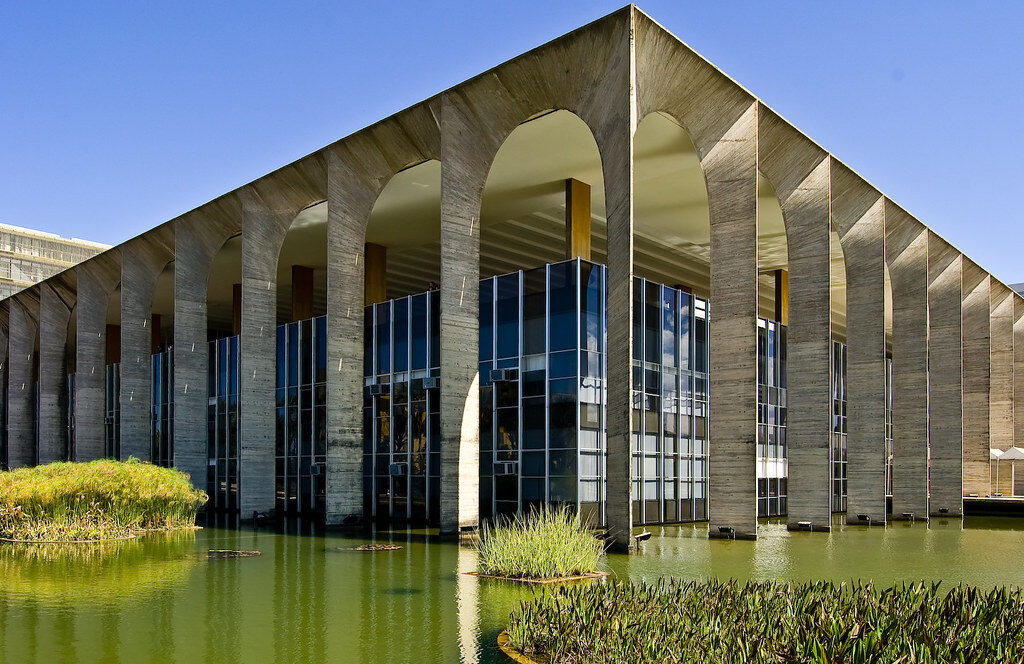
Itamaraty, as the Ministry of Foreign Affairs is known, has a rare history. It was one of the few ministries in the world to help build its own country. Diplomats such as the Baron of Rio Branco were key players in Brazil's negotiated independence back in the nineteenth century. This tradition, however, almost failed to survive the administration of Jair Bolsonaro.
When diplomacy became an ideological stage
With Ernesto Araújo as minister, Brazilian foreign policy broke with principles enshrined in the Constitution. Bolsonaro sidelined issues such as human rights and environmental protection. He went so far as to advocate moving the Brazilian embassy from Tel Aviv to Jerusalem, a symbolic and controversial measure in the Israeli-Palestinian conflict.
Even so, Itamaraty resisted, albeit partially. And this was not due to its own merits. Three external factors helped contain the damage.
The first was China. Since 2018, the Asian country has been Brazil's main trading partner, ahead of the United States and the European Union. In 2024, bilateral trade reached 158 billion dollars (external link). Agribusiness, a core electoral base for Bolsonaro, depends heavily on soybean exports to Beijing. This limited the extent to which he could antagonize the Chinese, even after having insinuated that COVID-19 was a biological weapon created in China.
The second factor was the pandemic itself, which eroded the government's image. The third was Joe Biden's arrival at the White House. Without Donald Trump as an ideological ally, Bolsonaro lost international leverage—including when the United States helped deter the January 8, 2023 coup attempt (external link).
A more autonomous Brazil under Lula
With Lula's return to the presidency, Itamaraty once again took center stage. Between 2024 and 2025, Brazil experienced an exceptional diplomatic period: it hosted the BRICS, G20, and COP30 summits. The administration also made progress on the trade agreement between Mercosur and the European Union and expanded ties with countries such as those in Southeast Asia. In this way, Lula implemented the strategy of multipolar autonomy, under which Brazil can engage with multiple poles of power simultaneously, without depending on a single partner.
Celso Amorim (external link), former foreign minister and currently Lula's chief foreign policy advisor, aptly summarizes this logic: strengthening ties with BRICS does not mean abandoning Europe, Latin America, or the United States. The figures confirm this. According to data from the Brazilian Ministry of Commerce, exports to both the European Union and the United States grew during Lula's current term.
This diversification is also evident in the defense sector. Brazil already produces the Swedish Gripen fighter jet locally. Embraer opened an office in India. Brazilian officials have held talks with Russia on maritime security and with Turkey on the joint production of military equipment. The objective is clear: to reduce dependence on American suppliers.
What if Flávio Bolsonaro wins?
Trump has already endorsed the candidacy of Flávio Bolsonaro, the former president's son. A prospective administration led by him would likely revert to automatic alignment with Washington, as in the Araújo era. This would jeopardize the agreement with the European Union as well as the partnerships built by Lula with countries such as India, Russia, and Turkey.
Yet there is an important caveat. The same conditions that constrained Bolsonaro the father remain present—and even stronger. Brazilian agribusiness's dependence on China is even greater today than it was in 2018. This means that, even under an administration more aligned with the United States, Brazil is unlikely to abandon China altogether as a trading partner.
The real question is not just who will win in October, but how much any winner will be able to alter already consolidated trends. Commercial dependence on China, the pursuit of alternative defense partners, and Brazil's leadership in the Global South are structural conditions, not fleeting ideological choices. A prospective Bolsonaro administration could weaken the country's multilateral discourse, but it would hardly reverse these material foundations. For Latin America, this means that Brazil will remain a key regional actor regardless of who occupies the Planalto—even if the tone and priorities certainly change.
This article, “O que as eleições podem mudar na política externa do Brasil,” by Alberto Maresca, was originally published in The Conversation and is licensed under Creative Commons (CC BY-ND 4.0). Original publication: The Conversation — “O que as eleições podem mudar na política externa do Brasil” (external link)