
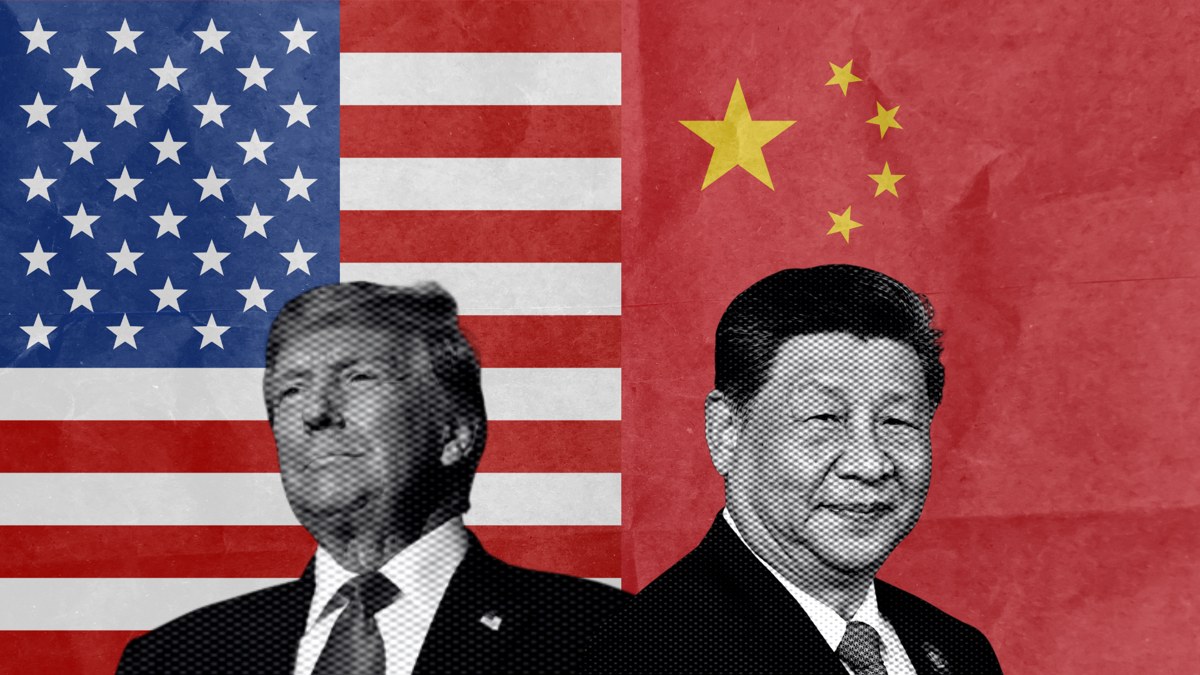

For many commentators, every crisis now seems to confirm the same conclusion: the world is entering a “new Cold War,” China is becoming a new Soviet Union, and World War III is no longer a distant possibility but an unfolding reality.
This language is dramatic, emotionally effective, and politically useful. It also reveals how poorly much of the public debate understands geopolitics.
The greatest danger in contemporary international analysis is not only misjudging events. It is the illusion of understanding them. Historical analogies are repeated as if they were explanations. Strategic competition is automatically described as ideological bipolarity. Simultaneous conflicts are treated as proof of an imminent world war. And every shift in power is framed as a final rupture in the international order.
These interpretations may be persuasive in headlines. They are far less convincing under serious scrutiny.
The world is changing rapidly. But it is not changing in the way many sensationalist narratives suggest.
China is not the Soviet Union
The most common mistake in current geopolitical discourse is the tendency to interpret China through the historical image of the Soviet Union.
This analogy is convenient, especially for political rhetoric in Washington, because it transforms a complex strategic rival into a familiar historical enemy. If China can be presented as the Soviet Union reborn, then containment appears not merely strategic, but morally and historically necessary.
Yet the comparison is deeply flawed.
The Cold War was structured around a rigid bipolar confrontation between two superpowers leading rival ideological, military, and economic blocs. The United States and the Soviet Union were separated by relatively limited economic interdependence and by a global struggle over political models, alliance systems, and the future of entire regions.
China occupies a very different place in the international system.
It is deeply integrated into global capitalism, central to manufacturing networks, trade flows, technological supply chains, and financial interdependence. It has certainly developed instruments of geopolitical influence and pursued national power with increasing confidence. But it has not constructed a global bloc equivalent to the Soviet camp, nor does it lead an ideologically cohesive coalition organized around military dependency.
This does not make China benign. It means only that understanding Chinese power requires more than recycling twentieth-century categories.
Beijing is not trying to recreate Moscow’s position. It is building influence through a distinct mix of production, trade, finance, infrastructure, technological expansion, diplomatic activism, and selective coercion. To reduce that strategy to a “new Soviet threat” is not serious analysis. It is intellectual laziness disguised as geopolitical realism.
More violence does not automatically mean World War III
A second interpretive error is the belief that the multiplication of conflicts means the world is already on the verge of a third world war.
The wars in Ukraine and Gaza, rising tensions in East Asia, persistent instability in parts of Africa, and intensifying great-power rivalry have undoubtedly made the international environment more dangerous. But a more violent world is not the same thing as a world already moving inevitably toward global war.
A world war is not simply a collection of crises happening at the same time. It implies a much broader process of military escalation, alliance activation, strategic coordination, and systemic mobilization across major powers.
That is not the structure we see today.
There are regional wars, proxy struggles, armed disputes, and serious risks of escalation. There are also points of connection among some revisionist and non-Western powers. But there is no rigid alignment of blocs comparable to those that defined the First or Second World Wars, and not even one equivalent to the Cold War divide.
China is not rushing to militarily rescue every state that challenges the United States. Its partnerships are selective, pragmatic, and shaped by calculation rather than ideological loyalty. Even where Beijing has strategic alignment with countries such as Russia or Iran on certain issues, that does not amount to an integrated military front prepared for global war.
The invocation of “World War III” often says more about the psychology of fear than about the actual structure of international politics.
This does not mean the risks are imaginary. Miscalculation, overreaction, and chain escalation remain real possibilities. But serious analysis must distinguish between danger and inevitability. The first demands attention. The second too often reflects sensationalism.
Power is not only military
Another widespread misconception is the assumption that geopolitics is fundamentally reducible to military confrontation.
This view is especially misleading in the case of China.
Power in international politics is exercised through a broad repertoire of instruments: military force, economic leverage, technological capacity, diplomatic negotiation, institutional participation, financial flows, developmental cooperation, and cultural projection. States combine these tools in different ways, depending on their goals, constraints, and strategic traditions.
China’s rise has been marked not only by military modernization but by the use of trade, investment, infrastructure financing, industrial capacity, digital technologies, and long-term diplomatic engagement. Its Belt and Road projects, development finance, regional production networks, and technological expansion are not separate from geopolitics. They are geopolitics.
Some observers make the opposite mistake and interpret this emphasis on cooperation as proof that China does not practice power politics. That, too, is incorrect.
China does pursue power. It seeks influence, strategic advantage, and room for maneuver. It can cooperate, persuade, pressure, and retaliate. It can present itself as a partner while simultaneously expanding dependency or using asymmetries for leverage.
The point is not that China stands outside power politics. The point is that power politics has always involved more than armies and warships.
Those who understand only the military grammar of power often miss how influence is accumulated long before force is openly used.
The crisis of American leadership is not the end of world order
If China’s rise is frequently misunderstood, so too is the changing position of the United States.
Many observers now speak as though the erosion of American leadership automatically means the collapse of the liberal international order. This conclusion is overstated.
The United States remains one of the most powerful actors in history. Its military reach, financial centrality, technological ecosystem, alliance networks, intelligence capabilities, and diplomatic weight are still extraordinary. What has changed is not simply American power, but American willingness to bear the costs of leadership in the institutional order it helped build after 1945.
Washington has increasingly shown less consistency in sustaining multilateral commitments, defending universal rules when politically inconvenient, and investing in the legitimacy of the very mechanisms it once championed. In many cases, it has preferred transactional arrangements, selective engagement, unilateral action, or domestic political gain over long-term systemic stewardship.
That retreat matters. But it should not be confused with the disappearance of the institutions, norms, and regimes created during the postwar era.
The liberal international order is under pressure, but pressure is not the same as extinction. International organizations still operate. Legal norms still matter. Multilateral regimes still structure expectations and create arenas of contestation. The real question is no longer whether the order will survive unchanged, but who will sustain, contest, reform, or selectively hollow it out.
What we are witnessing may not be the end of order, but the fragmentation of leadership.
The Global South is not a unified anti-Western bloc
A final misunderstanding concerns the so-called Global South.
In public debate, the term is often used as if it referred to a coherent geopolitical camp lined up against “the West.” This is analytically imprecise.
The Global South includes countries at dramatically different levels of development, with distinct political systems, strategic cultures, regional interests, and external partnerships. It includes major powers, middle powers, emerging economies, and highly vulnerable states. Some are deeply integrated with Western economies. Others pursue greater strategic autonomy. Some cooperate closely with China. Others remain cautious or ambivalent.
What many of these countries share is not a unified anti-Northern ideology, but frustration with underrepresentation, asymmetry, and the historical imbalance of voice within international institutions.
Their central demand is often not the destruction of the existing order, but greater participation in shaping it.
That is why platforms such as BRICS should not be simplistically treated as anti-Western military formations. They are better understood as arenas for coordination, bargaining, and institutional revision. Their members do not agree on everything. In many cases, they disagree profoundly. But they converge in wanting a larger role in global governance and more room to defend their own development priorities.
To call this a new hostile bloc is to misunderstand both the diversity of the Global South and the nature of the transformations under way.
The real problem is not China alone. It is bad analysis.
The most serious weakness in contemporary geopolitical commentary is not bias toward one side or another. It is conceptual imprecision.
The world is indeed experiencing a redistribution of power, a crisis of leadership, a rise in geopolitical competition, and a more fragmented strategic environment. These developments are significant enough. They do not need to be dramatized through lazy analogies and apocalyptic forecasts.
Not every rivalry is a Cold War.
Not every conflict is a world war in formation.
Not every challenge to Western dominance is a coherent anti-Western bloc.
And not every crisis in American leadership means the international order has already collapsed.
To understand geopolitics requires more than urgency. It requires historical perspective, conceptual discipline, and a willingness to distinguish between what is real, what is possible, and what is merely rhetorically convenient.
The world has changed.
The dangerous illusion is believing that repeating old formulas is enough to explain it.